if the governor fails to act on a bill in the prescribed time what happens to it
Suppressing fires has failed. Here's what California needs to do instead.
It'south fourth dimension to reverse a century of fire-management policy. That will require sweeping regulatory reforms, and tons of money.
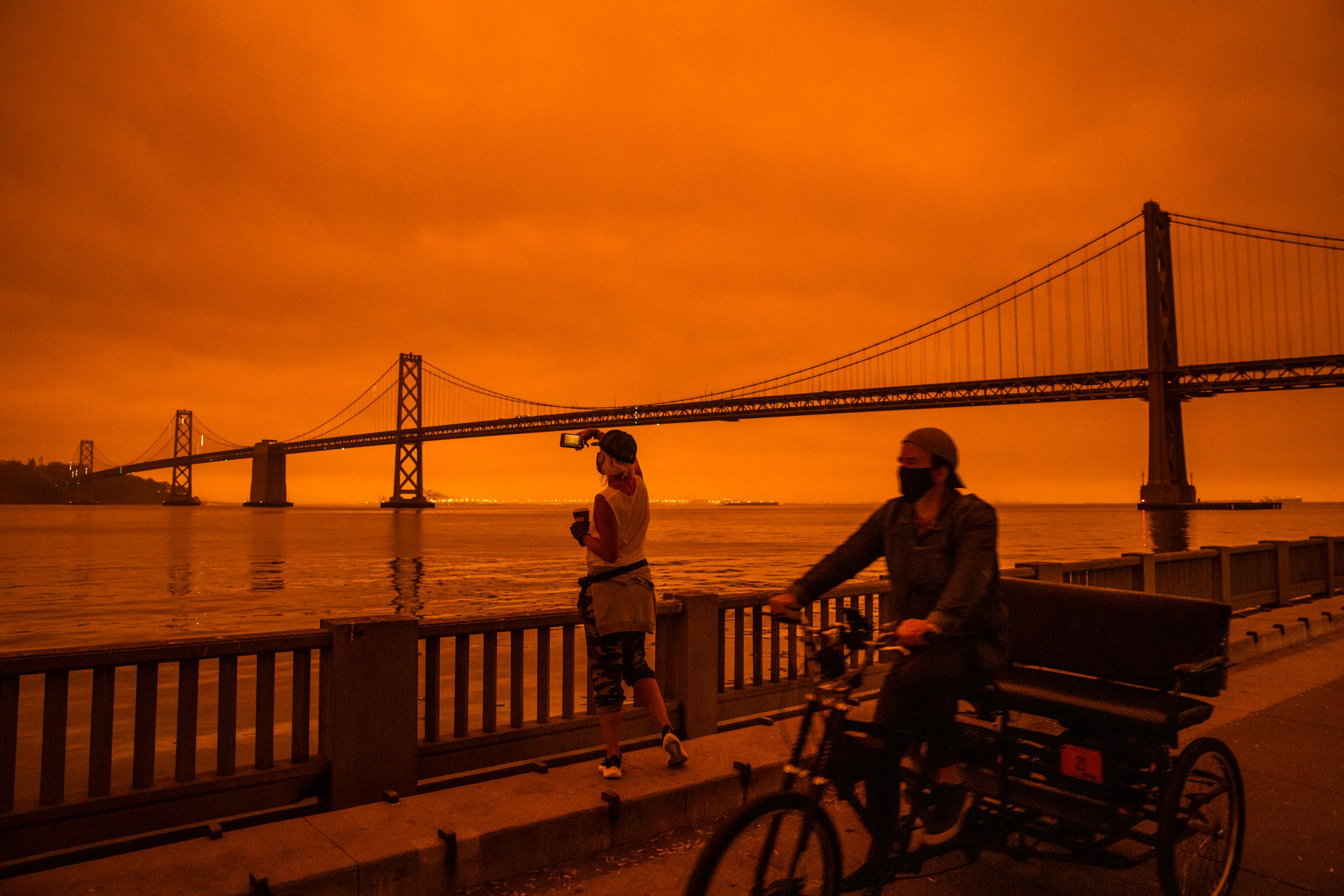
Five of California's x largest fires in modern history are all called-for at once. Together, this year's wildfires have already destroyed 4,200 buildings, forced hundreds of thousands of people to abscond their homes, and scorched more than iii.two one thousand thousand acres across the state.
That's larger than Yellowstone and Yosemite National Parks combined, and nearly half the area of Massachusetts. The latest blazes follow a cord of peculiarly deadly and devastating burn seasons in California, and scientists say climate change will ensure even worse ones to come.
To anyone who lives here, or anyone who'south watching, the situation is maddening and seems utterly unsustainable. So what'south the solution?
There'due south an overwhelming to-do list. But ane of the clearest conclusions, equally experts accept been saying for years, is that California must begin to work with fires, not only fight them. That ways reversing a century of U.s.a. burn down suppression policies and relying far more on deliberate, prescribed burns to clear out the vegetation that builds upward into behemothic piles of fuel.
Such practices "don't forestall wildfires," says Crystal Kolden, an assistant professor at the University of California, Merced focused on fire and land management. "But it breaks up the landscape, and then that when wildfires exercise occur, they're much less astringent, they're much smaller, and when they occur effectually communities, they're much easier to control."
Awaiting a spark
The Great Fire of 1910 burned iii meg acres beyond Idaho, Montana, and surrounding areas, killed near 90 people, destroyed several towns, and famously ushered in an era of naught tolerance for fires in the Us. It and astringent fires that followed prompted the Us Forest Service to officially implement the "x a.m. policy" in 1935, with a goal of containing whatsoever burn by that time the morn after it was spotted.
Decades of rushing to stamp out flames that naturally clear out small trees and undergrowth have had disastrous unintended consequences. This approach means that when fires do occur, there's often far more fuel to burn down, and it acts as a ladder, assuasive the flames to climb into the crowns and take down otherwise resistant mature trees.
Climate change, which exacerbates these risks, seems to accept finally tipped the residual of what was an increasingly untenable state of affairs, says Anthony LeRoy Westerling, who is also at UC Merced. In California, it almost certainly intensified the prolonged drought earlier this decade, which killed some 150 1000000 copse in the Sierra Nevada range.
Meanwhile, temperatures are rising and rainfall patterns are condign more extreme. Unusually wet winters promote the growth of trees and other plants, followed by dry, hot summers that draw the wet out of them.
This creates a tinderbox when the gusty winds arrive in the fall: a vast buildup of dry fuel simply awaiting a spark, whether from a lawnmower, downed power line, or lightning strike.
A century-long backlog of piece of work
The trouble now is the staggering scale of the work to clean this up.
As much as 20 million acres of federal, state, or private country across California needs "fuel reduction handling to reduce the risk of wildfire," according to earlier assessments by the California Department of Forestry and Burn Protection and other state agencies. That's almost two-thirds of the land'due south 33 million acres of forests and trees, and six times the area that has burned so far this twelvemonth.
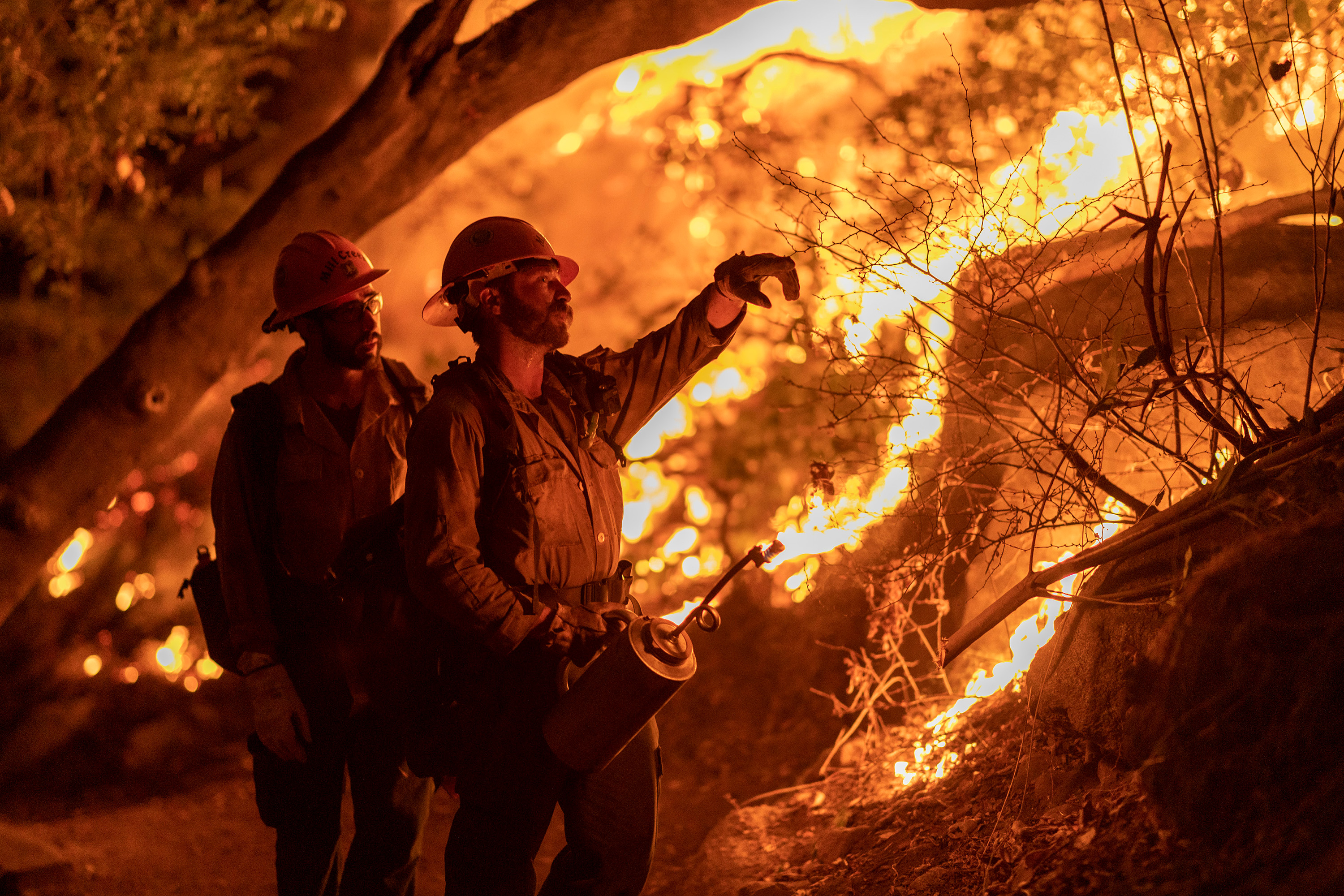
This "treatment" can include prescribed burns prepare nether controlled conditions—ideally, spaced out geographically and across the year to prevent overwhelming communities with smoke. It can also mean using saws and machines to cut and sparse the forests. Another selection is "managed wildfire," which means monitoring fires but assuasive them to burn when they don't directly endanger people or holding.
More than than a century of deferred work, however, ways it'south hard to get into places that demand thinning. It's also risky to do prescribed burns or let natural fires to rage, since the fuels are so built upward in many places, Westerling says.
PHILIP PACHECO/GETTY IMAGES
A 2018 report by the Little Hoover Commission, an contained state oversight agency, recommended cleaning out 1.1 million acres a year. That would still take 2 decades, and require a lot of workers and coin. Prescribed burns on forest and park lands can cost more than $200 per acre, while thinning can hands top $1,000, depending on the terrain. So the total costs could range from hundreds of millions of dollars to well above a billion per year.
Still, that'due south a fraction of the costs incurred past out-of-control wildfires. To take just ane example, the devastating Wine Land Fires in October 2017 did more than $9 billion worth of damage in a single month. Contesting wildfires on US Forest Service land runs more $800 an acre.
And without thinning and burning, the wildfires are but going to get worse.
If the goal is to burn upwards excess fuel, why not just allow the wildfires rage? The trouble is that runaway fires in overgrown forests don't achieve the same results as controlled burns. These intense blazes can level vast stretches of the forest rather than simply clearing out the undergrowth and leaving the big trees standing, says Scott Stephens, a professor of fire science at UC Berkeley. Instead of restoring the health of the forests, large, uncontrolled fires often transform them into shrub land, where vegetation grows chop-chop and severe fires tin apace render.
Funding and accountability
The country isn't doing annihilation close to the necessary amount of work today. Thinning and prescribed burns both mostly cover around tens of thousands of acres per year, a tiny fraction of what the Picayune Hoover Commission recommended. In 2018, the state passed a law dedicating $1 billion over 5 years to wildfire prevention. Belatedly concluding year, Governor Gavin Newsom signed a package of fire bills that included another $1 billion for preparedness and emergency response. That'south still not at the levels needed.
The practiced news is that California reached an agreement in August with the Usa Wood Service to heave these efforts, with a goal of treating a million acres per year for the adjacent two decades. The piece of work would be evenly split between the parties, even though the federal government owns 57% of California's forests while land and local agencies only ain 3%. (The remaining 40% is held by "families, Native American tribes, or companies.")
The bad news is it's a "memorandum of agreement," non a bounden police—and there's no firm additional funding commitment.
The problem is that "these agencies have been proverb things like this for the better part of five decades," says Michael Wara, a senior research scholar at the Stanford Woods Institute for the Environs and member of California'southward Wildfire Commission. "The funding is fundamental. As is a clear line of accountability if they don't really follow through."
DAVID MCNEW/GETTY IMAGES
Prescribed burning faces other hurdles, including public concerns over fume, safety, and wild fauna; drawn-out environmental review processes; and conflicts with timber interests. The logging industry owns 14% of California'southward forest land and makes money by removing the mature trees, not the kindling.
Setting far more than fires volition require sweeping regulatory reforms to streamline the approvals process. It will also probable necessitate the cosmos or appointment of a land bureau singularly dedicated to fuel handling, Wara says. Correct now, burning and thinning efforts are managed past the California Department of Forestry and Fire Protection, which, he believes, volition ever prioritize the job that the public and politicians judge it on: containing the death and destruction from active fires.
"Burn season is always coming, and they're e'er responsible for it," Wara says. "I think we need a new agency whose sole mission is burn gamble reduction."
The fire side by side time
Kolden, of UC Merced, stresses that California will besides need to ready for the fires that will inevitably intermission out no matter what the state does.
"Nosotros demand to expect at the places that are well-nigh at risk for non just fires, but disastrous fires that destroy whole communities, and do the mitigation work that volition save lives and reduce property devastation," she says.
Among other things, that will require adopting stricter building codes for the materials used to build structures; trimming back trees; widening the space effectually structures; and retrofitting existing homes and buildings with burn down-resistant features. Communities volition likewise need meliorate burn down detection and notification systems, redundant evacuation routes, and more effective emergency response practices.
And California'due south leaders need to make up one's mind whether to fifty-fifty permit communities rebuild afterwards especially devastating blazes, such as the Camp Fire that all just wiped out the boondocks of Paradise.
In the longer term, of course, we need to ho-hum down climatic change. That won't lessen the current level of chance, but information technology could at least limit how much worse things get.
The number of days with farthermost burn down risk weather across California could increment by more than l% toward the end of the century under a scenario in which global emissions peak around 2050 and decline thereafter, according to one contempo study. In the worst-case emissions scenario, that number could almost double in some regions, exceeding 15 days each fall.
DIEGO SAEZ-GIL
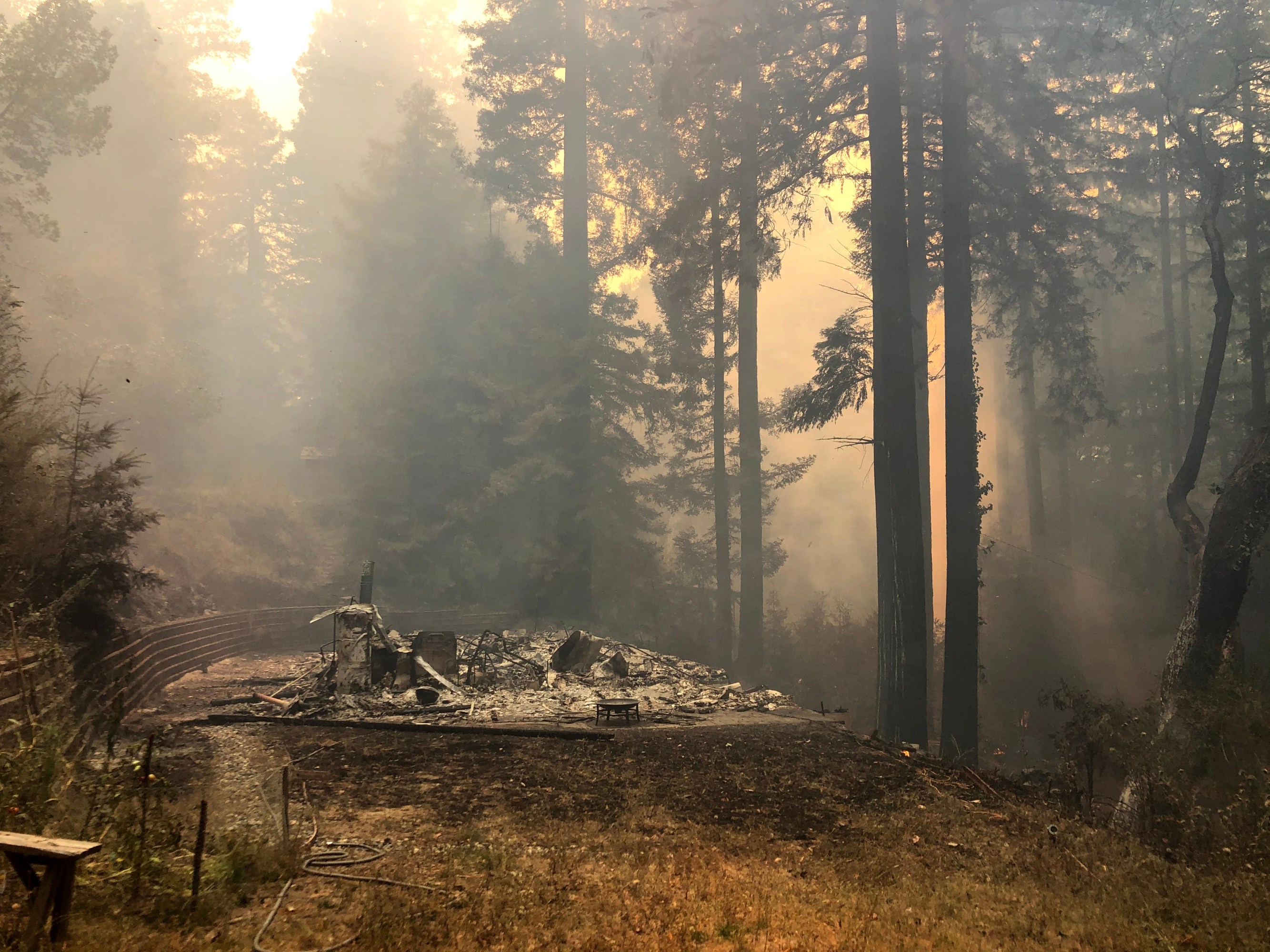
Equally devastating as the fires have get, we're nevertheless just at the early edge of climate change, says Diego Saez-Gil, chief executive of Pachama, a startup using AI and satellite data to help restore and protect forests.
"I do hope that the orange skies in San Francisco, and the fires and the floods and the hurricanes, are really wake-up calls," he says. "Instead of denying or neglecting information technology, or whatever attitude we had in the past, it's time nosotros all go together and start working on this very seriously."
He now knows the dangers firsthand. V days after those lightning storms set California on fire, the flames reached his abode in the Santa Cruz Mountains and burned it to ashes.
Deep Dive
Climate change
Stay connected
 Illustration by Rose Wong
Get the latest updates from
MIT Technology Review
Observe special offers, height stories, upcoming events, and more.
Source: https://www.technologyreview.com/2020/09/17/1008473/wildfires-california-prescribed-burns-climate-change-forests/
0 Response to "if the governor fails to act on a bill in the prescribed time what happens to it"
Post a Comment